Smart Packing: Fit a Week’s Clothes in a Carry-On Bag
Embarking on a trip often brings the exciting challenge of packing. For many travelers, the goal is to master smart packing carry-on only, avoiding checked baggage fees and the hassle of waiting at the baggage claim. Fitting a week’s worth of clothes into a single carry-on might seem like a daunting task, but with the right strategies and a bit of planning, it’s entirely achievable.
This comprehensive guide will walk you through proven techniques and essential tips to transform you into a packing pro. We’ll cover everything from selecting the ideal luggage to optimizing every inch of space, ensuring you have everything you need without overpacking. Get ready to streamline your travel experience and embrace the freedom of light travel.
Choosing the Right Carry-On and Outfit Planning
The foundation of successful smart packing carry-on begins with your luggage itself. Not all carry-on bags are created equal, and selecting one that maximizes space while adhering to airline regulations is crucial. Look for lightweight bags with a simple, open interior that allows for flexible packing. Soft-sided bags often offer a bit more give than hard-sided ones, which can be beneficial for squeezing in those last few items. Additionally, consider bags with external compression straps, which can help condense your packed items and make the bag feel more compact.
Beyond the bag, thoughtful outfit planning is perhaps the most impactful step in reducing your luggage volume. Instead of packing individual outfits for each day, think in terms of interchangeable pieces. Choose a color palette that allows most tops, bottoms, and layers to be mixed and matched. Neutrals like black, white, gray, and navy are excellent bases, and you can add pops of color with accessories or a single statement piece. This approach dramatically reduces the number of garments you need to bring, as each item can serve multiple purposes throughout your trip.
When selecting your clothing, prioritize versatile items that can be dressed up or down. A simple black dress, for instance, can be worn casually during the day or accessorized for an evening out. Similarly, dark-wash jeans can transition seamlessly from day activities to dinner. Always check the weather forecast for your destination and pack accordingly, but remember to include one or two lightweight layers for unexpected temperature drops or air-conditioned environments. By focusing on versatility and a cohesive color scheme, you’ll be amazed at how much less you need to pack while still having plenty of stylish options.
Mastering Rolling and Folding Techniques
Once you have your clothing selections, the next critical step in smart packing carry-on is how you arrange them within your bag. The way you roll or fold your clothes can make a significant difference in both space utilization and wrinkle prevention. While there are various schools of thought on the best method, two techniques consistently prove most effective: the KonMari rolling method and bundle wrapping. Each has its advantages, and often a combination of both works best depending on the type of clothing.
The KonMari rolling method, popularized by Marie Kondo, involves folding clothes into small, tight cylinders that stand upright. This technique is particularly effective for t-shirts, tank tops, and thinner fabrics. By rolling items tightly, you minimize air pockets and create a compact, uniform shape that fits snugly into your luggage. This method also helps prevent wrinkles, as the fabric is rolled rather than sharply creased. To execute this, fold your item lengthwise, then fold it in half or thirds, and finally, roll it tightly from one end to the other. The resulting roll should be firm and self-supporting.
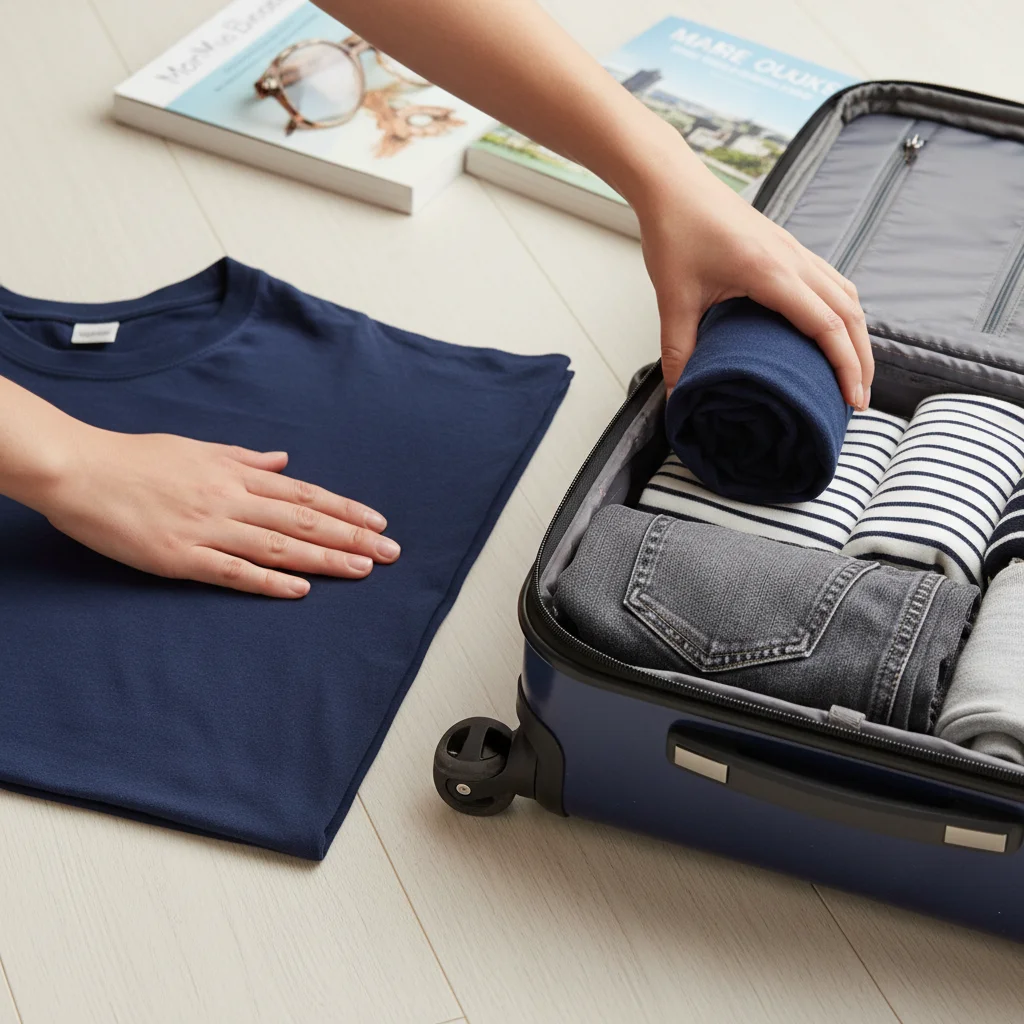
For bulkier items like sweaters, jackets, or dress shirts, a traditional fold might still be necessary, but ensure they are folded as flat as possible. Alternatively, consider bundle wrapping. This advanced technique involves wrapping smaller, wrinkle-prone items around a central core, such as a travel toiletry bag or a soft sweater. You start with the most wrinkle-resistant items on the outside, like jackets or trousers, and then layer more delicate items like shirts and blouses, wrapping them around the core one by one. This method significantly reduces creasing because the clothes are not folded sharply, but rather gently curved around the core. Experiment with both rolling and bundle wrapping to see which works best for your specific wardrobe and luggage type.
Utilizing Packing Aids and Space Savers
Beyond rolling and folding, several specialized packing aids can further enhance your smart packing carry-on efforts. These tools are designed to compress items, organize your belongings, and protect delicate pieces, making your travel experience much smoother. Investing in a few key items can dramatically increase the amount you can fit into your carry-on while keeping everything organized and easily accessible. They also help prevent the dreaded ‘explosion’ of clothes when you open your suitcase.
Essential Packing Aids
- Packing Cubes: These zippered fabric containers are a game-changer for organization. They allow you to categorize your clothes (e.g., shirts in one, pants in another, underwear in a third) and compress them slightly. When you arrive, you can simply pull out the cube you need without disturbing the rest of your meticulously packed bag. Different sizes of cubes are available, making them versatile for various items.
- Compression Sacks: For bulkier items like sweaters, jackets, or even extra shoes, compression sacks (not vacuum bags, which can damage clothes and are not carry-on friendly) are invaluable. These bags allow you to squeeze out excess air, significantly reducing the volume of your clothing. Just be mindful that while they save space, they don’t reduce weight, so keep an eye on airline weight limits.
- Toiletry Bags and Travel-Sized Containers: Decant your liquids into travel-sized bottles (under 3.4 ounces or 100 ml) to comply with TSA regulations. A hanging toiletry bag can be a real space-saver in small hotel bathrooms, keeping your essentials organized and off the counter.
- Shoe Bags: Protect your clothes from dirty shoe soles by placing footwear in dedicated shoe bags or plastic grocery bags. This also keeps the shoes separate and prevents odors from transferring to your clean garments.
Remember that every item you bring should have a purpose. Avoid packing ‘just in case’ items unless they are truly essential. By strategically using these packing aids, you can transform a chaotic collection of clothes into a perfectly organized and compact carry-on, ready for any adventure.
Minimizing Toiletries and Personal Items
One of the easiest areas to overpack, yet also one of the easiest to streamline, is toiletries and personal items. For effective smart packing carry-on, every ounce and inch counts, and liquids, gels, and aerosols are subject to strict TSA rules. The goal here is to bring only what you absolutely need, in the smallest possible containers. Think strategically about what you use daily versus what you can temporarily live without or purchase at your destination.
Start by decanting your favorite shampoos, conditioners, lotions, and body washes into reusable travel-sized bottles. These typically hold 100ml (3.4 ounces) or less, which is the maximum allowed for carry-on liquids. Solid alternatives are also excellent space-savers; consider solid shampoo bars, conditioner bars, and even solid toothpaste tablets. These eliminate the risk of leaks and don’t count towards your liquid allowance, freeing up valuable space in your clear quart-sized bag.
When it comes to makeup, be ruthless. Choose multi-purpose products like tinted moisturizer with SPF, or a palette that combines eyeshadows, blush, and bronzer. Only bring the essentials you use daily, not your entire collection. For medications, keep them in their original containers if possible, especially if they are prescription, but only pack the amount you need for the duration of your trip, plus a few extra doses as a buffer. Many pharmacies offer small pill organizers perfect for a week’s supply.
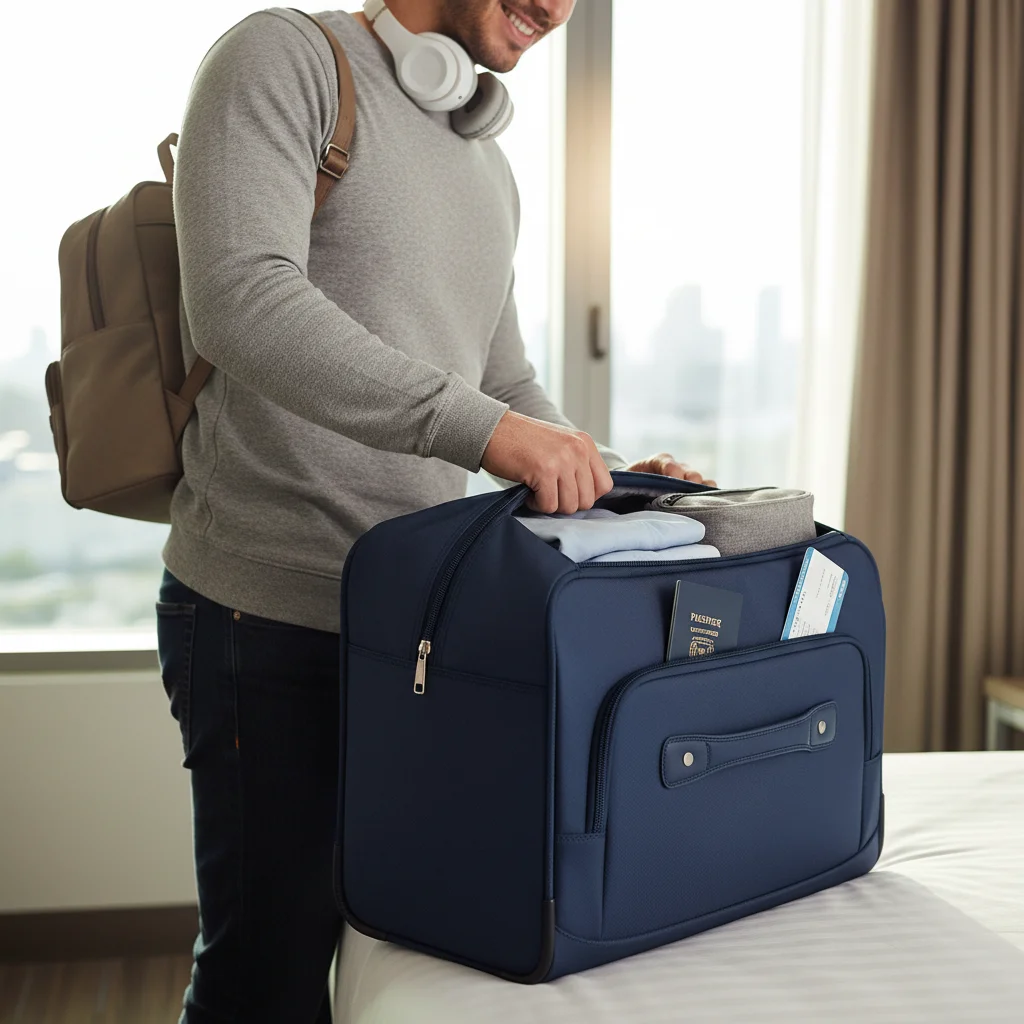
Finally, consider leaving items like large hair dryers or styling tools at home. Most hotels provide basic hair dryers, and you can often adapt to a simpler hair routine for a week. If you absolutely need a specific tool, look for travel-sized versions that are dual voltage. By being intentional about your toiletries and personal items, you’ll free up significant space and weight in your carry-on, making your journey lighter and more efficient.
Strategic Footwear and Accessory Management
Footwear and accessories are notorious space hogs in any luggage, often taking up disproportionate amounts of room and adding considerable weight. To master smart packing carry-on for a week-long trip, you need a disciplined approach to what you put on your feet and what embellishments you bring. The key is versatility and minimizing redundancy, ensuring every item serves a purpose and complements multiple outfits.
For shoes, aim for a maximum of two to three pairs, including the pair you wear on the plane. Choose one comfortable walking shoe (sneakers or sturdy flats), one dressier option (loafers, ankle boots, or heels that can be worn for evenings), and possibly a pair of sandals or flip-flops if your destination calls for it. Always wear your bulkiest shoes on the plane to save space and weight in your bag. Pack other shoes in dedicated shoe bags or plastic bags to keep dirt from transferring to your clothes. Utilize the empty space inside your shoes by stuffing them with small items like socks, underwear, or charging cables. This not only saves space but also helps maintain the shoe’s shape.
Accessories can elevate an outfit without adding bulk. Instead of packing multiple chunky sweaters, bring a lightweight scarf that can add warmth, color, or style to several different ensembles. Minimalist jewelry pieces are also excellent for versatility; a few necklaces or earrings can transform an outfit without taking up much room. Avoid bringing large, heavy statement pieces unless they are absolutely essential for a specific event. Belts can be rolled up and placed inside shoe cavities or along the perimeter of your suitcase.
When it comes to bags, consider bringing one primary handbag that you use daily and perhaps a foldable tote bag or backpack for souvenirs or extra items you might acquire. The foldable bag can be stashed flat in your carry-on and pulled out when needed. By thoughtfully selecting your footwear and accessories, focusing on items that offer multiple uses and take up minimal space, you’ll significantly enhance your ability to pack a week’s worth of essentials into a single carry-on bag.
Frequently Asked Questions
Q: What is the most effective way to pack shoes in a carry-on?
A: Wear your bulkiest pair on the plane. For other pairs, stuff them with socks or small items to save space and maintain shape, then place them in shoe bags to protect your clothes from dirt.
Q: Can I really fit a week’s worth of clothes into a carry-on without wrinkles?
A: Yes, by using rolling techniques like the KonMari method for most items and bundle wrapping for wrinkle-prone garments, you can significantly reduce creasing and maximize space.
Q: Are packing cubes worth the investment for smart packing?
A: Absolutely. Packing cubes help organize your clothes, slightly compress them, and make it easier to find items without unpacking your entire bag, making them a highly recommended tool for efficient packing.
Q: How do I handle liquids for a carry-on only trip?
A: Decant all liquids into travel-sized containers (100ml/3.4oz or less) and place them in a single, clear, quart-sized zip-top bag. Consider solid alternatives for shampoo, conditioner, and soap to save space and avoid liquid restrictions.
Q: What’s the best strategy for choosing clothes for a week-long trip?
A: Focus on a cohesive color palette and interchangeable items that can be mixed and matched to create multiple outfits. Prioritize versatile pieces that can be dressed up or down, and always check the weather forecast for your destination.
Official Resources
- TSA: The 3-1-1 Rule for Carry-Ons
- IATA: Baggage Guidelines
- U.S. Department of State: Travelers’ Checklist
- Rick Steves: Packing Smart
Conclusion
Mastering smart packing carry-on for a week-long trip is an invaluable skill that transforms your travel experience. By strategically choosing your luggage, meticulously planning your outfits with versatility in mind, and employing effective rolling and folding techniques, you can significantly reduce the volume of your belongings. The intelligent use of packing aids like compression sacks and cubes further optimizes space, while a disciplined approach to toiletries and footwear ensures you only carry the essentials.
Embracing these strategies not only saves you money on checked baggage fees but also streamlines your journey, allowing for quicker airport navigation and the freedom to move effortlessly. The peace of mind that comes with knowing everything you need is right there with you, organized and accessible, is truly priceless. So, next time you’re preparing for an adventure, remember these tips, pack smarter, and enjoy the unparalleled convenience of carry-on only travel. Your future self, and your shoulders, will thank you.
